
Medical Device Development
Internal R&D teams are shrinking.
Timelines are not.
Everything you need for your healthcare and medical device development
Kickr is the engineering team medical device companies bring in to add capacity without adding headcount. We get your program to a working device quickly, with engineering, machining, molding, and assembly.
Working with an outside partner usually costs time. Kickr is set up to remove those handoffs. The engineers designing a part sit down the hall from the machines that make it, so the loop between a design change and a part on your bench stays short.
Your first call is with an engineer, not a salesperson.
We’ll sign your NDA first, and you keep 100% of your IP.
50+ medical programs taken from idea to working prototype
ISO 13485-based internal QMS, available for design and development work
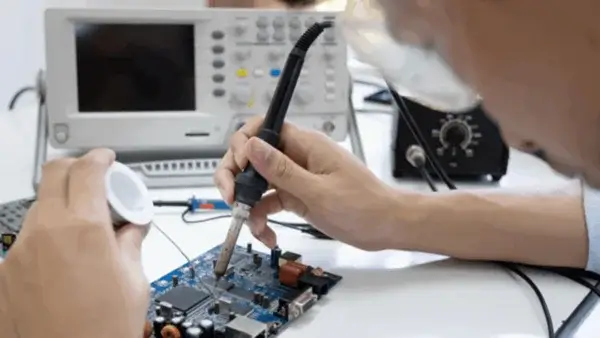
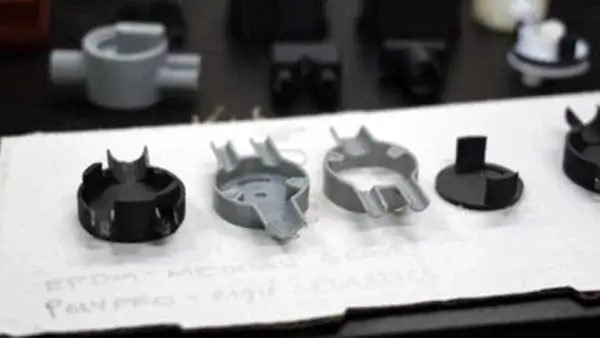
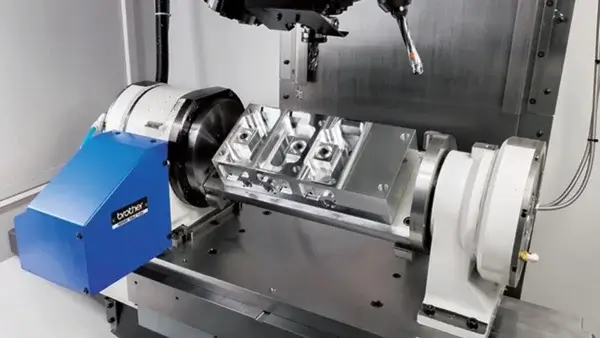
In-house CNC machining, molding, and clean-room assembly
What we take off your team’s plate
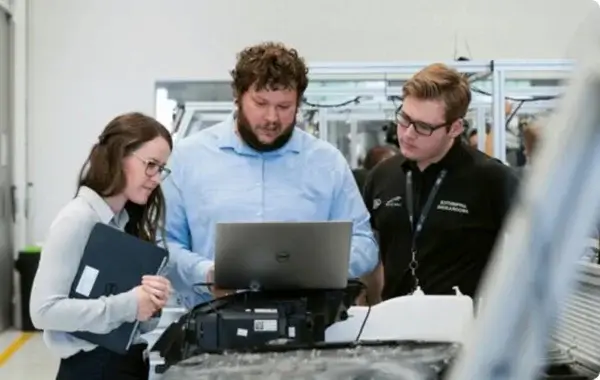
We assist right from Phase 0 when rapid experimentation and prototyping are critical to solving the hard challenges. Our shop is built for rapid prototyping all the way through pilot production for V&V testing.When a program moves into formal design controls, we can carry the design and development work forward with you.
We define target specifications, map the likely regulatory pathway, explore concepts and build working prototypes that retire technical risk before you commit to formal development. You get a clear go/no-go and a proof of concept to build on, not a pile of renderings.
From first functional prototype to engineering builds of up to hundreds of units for bench testing, user feedback and field evaluation. It all happens in our Atlanta shop, so you don’t need a contract manufacturer before you’re ready for one.
When a program moves past Phase 0, Kickr can own the design and development work, including planning and design inputs, design outputs through design freeze, verification and validation, and design transfer. We can train to and work in your QMS, work under Kickr’s ISO 13485-based QMS, or set up a standalone QMS for your program. You remain manufacturer of record throughout. Our templates align with ISO 13485:2016 and the FDA’s Quality Management System Regulation (QMSR).
Benchtop verification testing, including seal integrity, tensile and pull testing, and dimensional inspection, with test methods developed and documented in-house. For external standards testing, such as IEC 60601 electrical safety, sterilization, packaging and biocompatibility, we write the protocols and coordinate with accredited third-party labs.
Disciplines we have in-house:
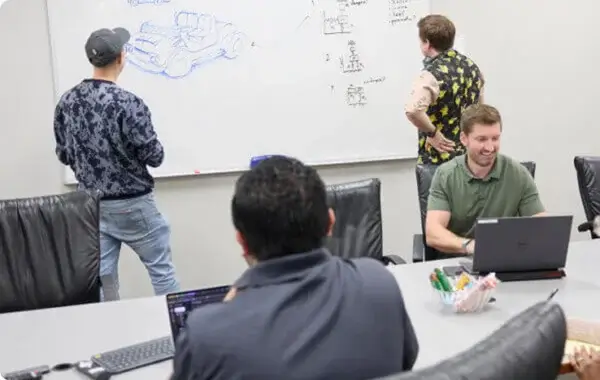
- Mechanical Engineering
- Electrical Engineering
- Firmware and Software
- Biomedical Engineering
- Quality Engineering
- Industrial Design and Human Factors
- Regulatory Affairs
Start Small
Engagements are scoped to where your program stands, with defined deliverables, a set timeline, and a clear decision point. We move fast, stay flexible, and own the outcome.

Medical programs we’ve engineered
The Kickr advantage
Whether your team has brought many devices to market or is working on its first, what slows programs down is the space between partners. We’ve designed Kickr to close it.
Days, not weeks, per design turn.
In-house CNC machining, injection molding, 3D printing and micromachining turn a design change into a testable part.
One partner instead of three.
Engineering, prototyping and bench testing sit under one roof, not split across a design firm, a prototype shop and a test lab.
Built to start at Phase 0.
Proof-of-concept work is a deep part of our expertise, not a side offering
Regulatory strategy before execution.
Our on-staff RA experts work directly with your team to develop the appropriate path forward prior to project kickoff.
Ready when you move into design controls.
We work in your QMS, in ours, or in one we set up for you. Either way, you retain full ownership of your design history file.
Where the work happens
A working engineering shop in Atlanta, set up so development never leaves the building.
Test benches

Fabrication and assembly
Molding
CNC machining
Clean rooms


When R&D shrinks, your roadmap shouldn’t.
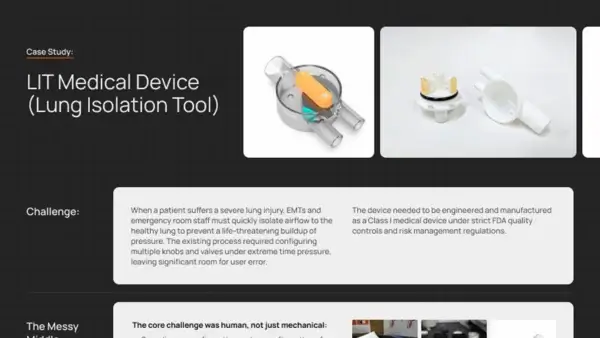
Take a closer look at how Kickr has helped medical companies. We’ll share where each one started, the engineering decisions along the way, what we built, and where the program went next. Perfect for R&D and engineering teams evaluating an outside partner.
"*" indicates required fields
Insights for medical teams

The Importance of a Design History File (DHF) in Medical Device Development
How Kickr Design Ensures Medical Device Compliance with IEC 60601 Electrical Testing

Understanding Sterilization & Medical Device Regulations In The Product Development Process
Start a conversation
Tell us where you stand and what you’re looking for. One of our engineers will reach out. We’ll sign your NDA first, and you keep 100% of your IP.
FAQ
Our team is fully in-house. Our biomedical engineers, quality engineers, and project managers work together under one roof, which matters a lot in medical device development where engineering decisions and regulatory strategy need to be tightly connected from day one.
A 510(k) is the FDA submission pathway used to show that a new medical device is substantially equivalent to an already-legally-marketed device. We support 510(k) submission and certification work as part of our documentation services.
As early as possible. Ideally, we’re brought in before deep engineering work starts. An early FDA regulatory analysis helps answer questions like weather you’ll need pre-clinical testing, sterilization testing, or specific labeling requirements before you’ve locked in a design.
We’ve worked across Class I through Class III devices, and our QMS templates are built to cover that full range. That means we can scale the rigor of documentation, testing, and design controls to match your device’s risk classification. View some of our recent medical projects here.