
A $400 prototype can cost you $40,000 by the time you find out what it didn’t tell you. That’s the math behind a pattern we see often: a founder hands a CAD file to the cheapest shop they can find, gets a part back that looks right, makes a decision based on it, and then spends the next nine months unwinding that decision in tooling, redesigns, and missed launch windows.
A prototype isn’t a deliverable. It’s a decision-making tool. When the tool is wrong, every decision downstream inherits the error. That’s the real price of cheap prototyping, and it doesn’t show up on the invoice.
What “cheap” actually means in prototyping
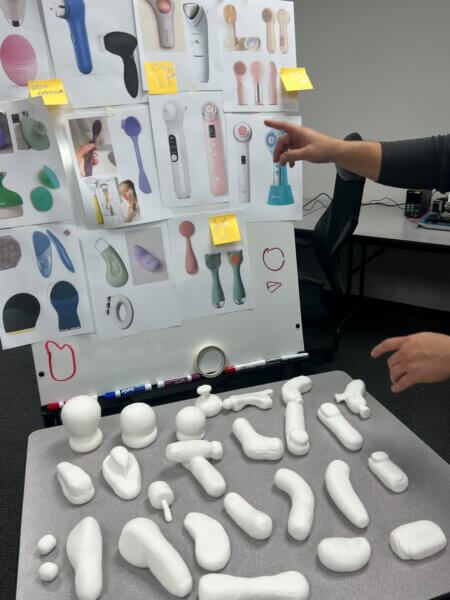
When we say cheap, we don’t mean inexpensive. Plenty of prototypes could be inexpensive. A foam study model to check ergonomics shouldn’t cost what a functional EVT unit costs, and we’d push back if it did.
Cheap means a prototype built without engineering judgment behind it. The shop didn’t ask why you needed it. They didn’t flag that the wall thickness you specified will warp in injection molding. They didn’t tell you that the off-the-shelf battery you sourced won’t pass testing. They printed what you sent, charged you for it, and moved on.
That’s the version of prototyping that gets sold as a feature: low-budget, factory-led, fast to the door. It sounds good until you trace what actually happens when prototyping skips the engineering layer.
Cost #1: The schedule slip you don’t see coming
When a prototype is built without considering manufacturability, you find out the part can’t be made the way it was designed somewhere between Design Validation Testing and tooling. By then, you’ve already paid for the prototype twice: once when it was built, and again when you have to redesign for moldability, source new materials, and rebuild. A tooling change after T1 sample approval typically runs 6 to 12 weeks and tens of thousands of dollars. A tooling change before kickoff costs you a CAD revision.
The math is uncomfortable. Two weeks of engineering review on the front end routinely prevents three months of correction on the back end. Founders who optimize for the cheapest, first prototype almost always lose that trade.
Cost #2: The redesigns nobody quotes you
A prototype that doesn’t test what it needs to test isn’t cheap. It’s free information about nothing.
We see this most often with electronics. A founder gets a working benchtop circuit from a freelancer, decides the product is technically viable, and starts raising on that proof. Six months later, when the circuit needs to fit inside an enclosure, survive a drop test, pass FCC, and run on battery for the duration the spec sheet promised, the architecture falls apart. The schematic that worked on the bench wasn’t designed for any of those constraints. Now you’re redesigning the board, the firmware, the enclosure, and the BOM at the same time.
Each redesign is its own project. New tooling, new tests, new compliance fees. The “cheap” prototype didn’t save money; it deferred the real engineering until the most expensive moment to do it.
Cost #3: The IP and safety exposure
This is the one that founders almost never price in.
A factory that builds your prototype cheaply is often building dozens of other prototypes cheaply, sometimes for adjacent products, sometimes without NDAs that hold up in their jurisdiction. We’ve had founders come to us after discovering a near-replica of their device before they’d even filed a provisional. That’s a foreseeable outcome of handing complete CAD packages to vendors whose business model depends on volume, not confidentiality.
The safety exposure is bigger. Consumer products that touch skin, carry current, store energy, or end up in a child’s hands have regulatory paths that prototypes need to be designed around from day one. UL and FCC requirements aren’t checkboxes you add later. They shape the architecture of the product. A prototype built without them is a prototype you can’t take to market, no matter how well it works on your desk.
Cost #4: The thing the prototype was supposed to tell you, but didn’t
This is the cost we care about most, because it’s the one that quietly kills products.
Every prototype should answer a specific question. Does the user understand how to hold it? Does the motor draw the current we modeled? Does the seal hold under the pressure cycles the product will see in the field? When a prototype isn’t designed around the question, you get a part back that looks like the product and tells you nothing actionable.
Founders then make confident decisions based on inconclusive evidence. They raise funds on it. They lock in a launch date. And when the unit finally reveals the question that should have been answered in P1, the timeline and the cap table both have to absorb the surprise.
What engineering-led prototyping actually changes
The shift isn’t about spending more. It’s about spending in the right sequence.
An engineering-led prototype starts with a written question: what decision does this build need to support? From there, the choices about material, fidelity, process, and cost follow naturally. A $300 SLA part is the right answer sometimes. A $15,000 functional EVT unit with a custom PCBA, real battery, and field-representative enclosure is the right answer other times. The number isn’t the point. The fit between the build and the decision is.
When that fit is right, prototypes compound. Each one closes a real risk and sets up the next one. By the time you reach DVT, you’ve already retired the surprises that would have shown up at tooling, and the tooling spend is the last big check you write, not the first of many corrections.
The takeaway founders earn the hard way
Cheap prototyping doesn’t save money. It moves the cost. It moves it from a place where it’s small and visible to a place where it’s large and structural. Founders who learn this early build companies that ship. Founders who learn it at tooling rebuild their burn rate around the lesson.
If you’re early enough to choose your prototyping approach, choose the one that treats the prototype as a question being answered, not a thing being made. The invoice will look bigger. The total cost of the program won’t.
If you’re ready to get started with an engineering-led prototype, reach out to our team here.