

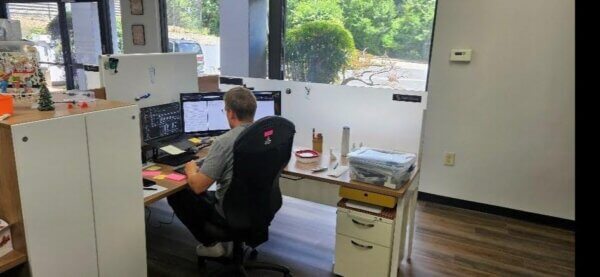
Follow along through a few days in the life of one of our mechanical engineers, Lee Farris.
Product development rarely looks like one heroic build. Across a normal week, it’s CAD revisions, back-ordered silicone tubing, sales calls, soldering, and the occasional cut finger from a stubborn plastic part. To show what the work actually involves, Mechanical Engineer Lee Farris logged four days of his schedule, timestamp by timestamp. Here they are in his own words, lightly formatted and otherwise untouched.
Wednesday
2:30 pm — I am ordering physical components of a subsystem of a custom prototype that I’ve been designing for my client: A comb that dispenses a variety of fluids. I need to open the CAD model, order a variety of off-the-shelf components that are in the design, start 3D prints on those parts that can be printed on our in-house equipment, and order 3D prints from vendors (if the part or material requires more advanced printers than what we have in-house).
2:55 pm — I realize that to test the parts properly, I’ll need to be connected to an actual showerhead, and this makes using a wall-wired power supply dangerous. I discuss instead specifying and ordering a 12V battery with a button as a temporary test component. He approves of the plan. Time to find parts.
3:10 pm — A vendor for plumbing components wants 2-factor authentication, but our purchasing department can’t be reached. I leave them a message.
3:29 pm — Silicone tubing for the pump is not in stock from the original vendor or alternates. Original vendor documentation on the part is lacking/contradictory. I need to specify replacement parts. Measuring on-hand parts to get dimensions for replacements. Update CAD model with accurate dimensions. Bookmark correct parts and insert into model for future reference.
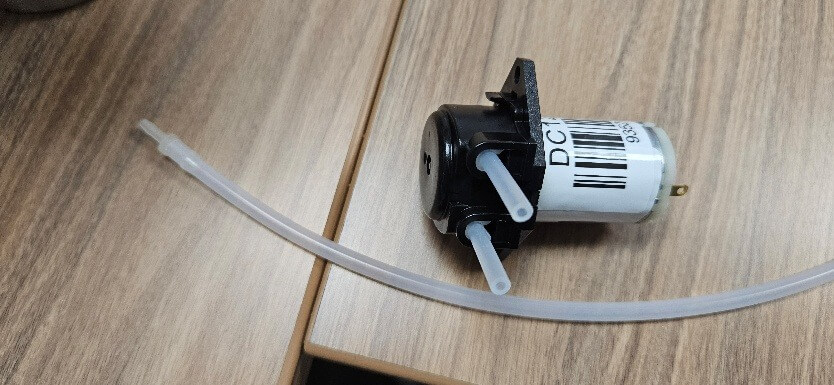
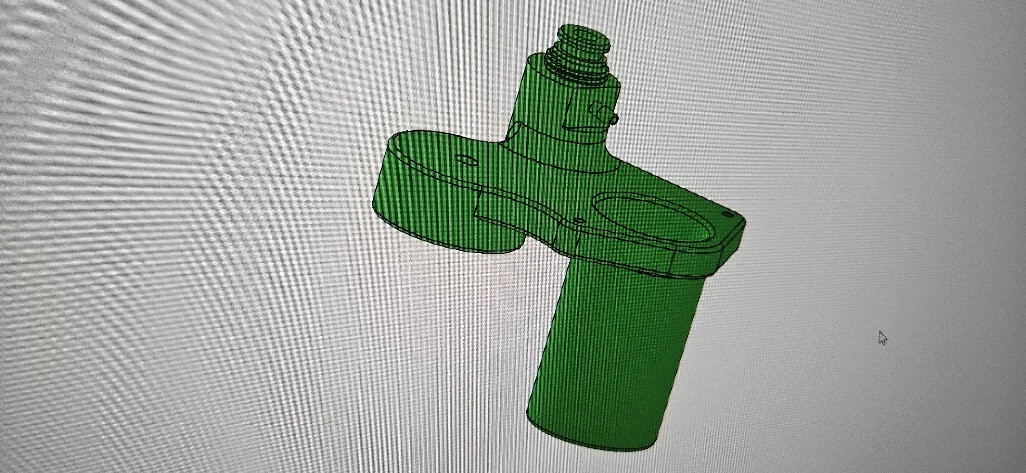
3:53 pm — I need to export CAD models in the correct format for 3D printing and set up prints. Checking on what resins we already have in-house and which are loaded in which printers. These parts need to be airtight, so the resin and orientation need to be set up carefully.
4:01 pm — The larger part is too big for our in-house printer. I opt to order both parts from a vendor, even though the smaller would fit and be faster, because the finish will be more similar.
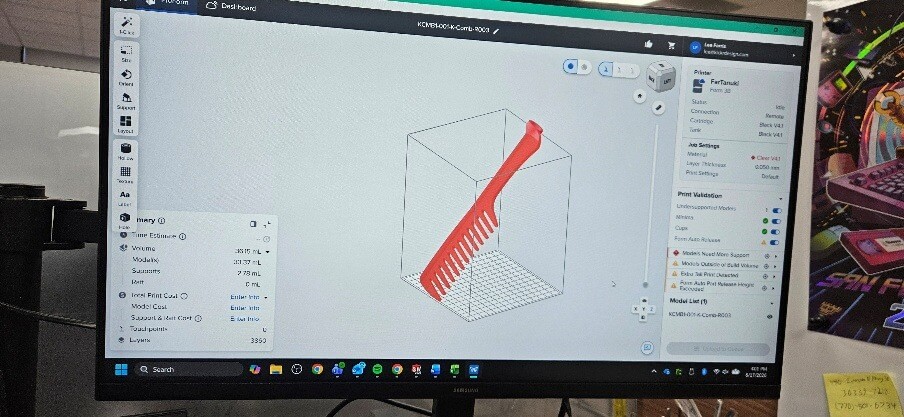
4:35 pm — All parts have been ordered. I put in Purchase Orders (documentation for tracking expenses and shipping).
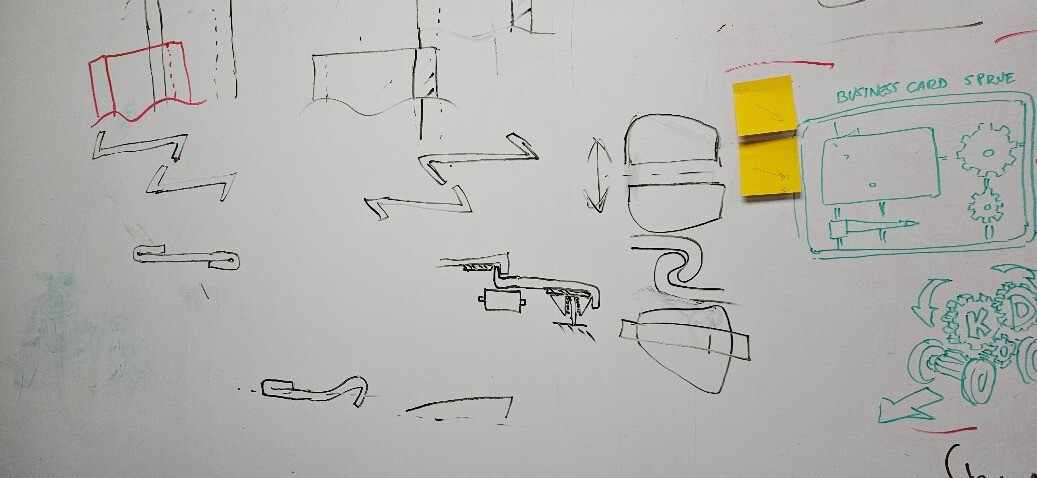
5:08 pm — I test the helical duct forming prototype with a thicker, steel material.
6:49 pm — Time to stop researching/troubleshooting duct-forming machines (got some good ideas though!). Will review with colleagues tomorrow to verify the ideas and then test implementation to see if it helps.
6:50 pm — I’m off the clock, and wander upstairs to Kickr Labs where light food is served. Eat a few chicken fingers and chat with a couple of entrepreneurs and a physicist looking for work. Quiz her about some interesting questions I have about the behavior of light at nanometer scale.
8:00 pm — Depart for home. Pick up Greek food on the way home (about an hour’s drive!).
9:00 pm — Reach home, get wife, eat dinner, watch funny YouTube videos, head up to bed around 10:40pm. Lights out around 11pm.
Thursday
5:20 am — Wake up, check calendar, nothing urgent, no morning meetings, and I’m ahead on hours for the week so far. Reset alarm for 7:20am.
7:20 am — Wake, bathroom/meds/dress, feed the cats, grab and fill my ice water, kiss wife goodbye and set out for work by around 8am. No coffee – I don’t have caffeine.
8:00–9:00 am — Typical Atlanta commute, including a McDonalds stop for a bacon egg and cheese biscuit which I eat for the last 10 minutes of the commute.
9:00 am — Get to my desk, greet coworkers, ask if we could use a physicist on staff (general answer is probably not). Start work on Duct forming machine; looking to review design with most capable teammate. Harrison and Tim are good options.
9:10 am — Video I uploaded yesterday doesn’t play for others (or me). Attempt re-upload.
9:20 am — Discuss technical challenges of current design with ME team and PM. We decided to make one iteration to address the obvious shortcomings of the current part, but then, if it does not work well in testing, to recommend to the client that we purchase an industrial version.
10:00 am — Revise CAD with feedback from videos of industrial machines.
2:00 pm — Joined a call with Addison (CEO) to discuss preparing a proposal for an automated machine vision system for identifying clothing types and defects.
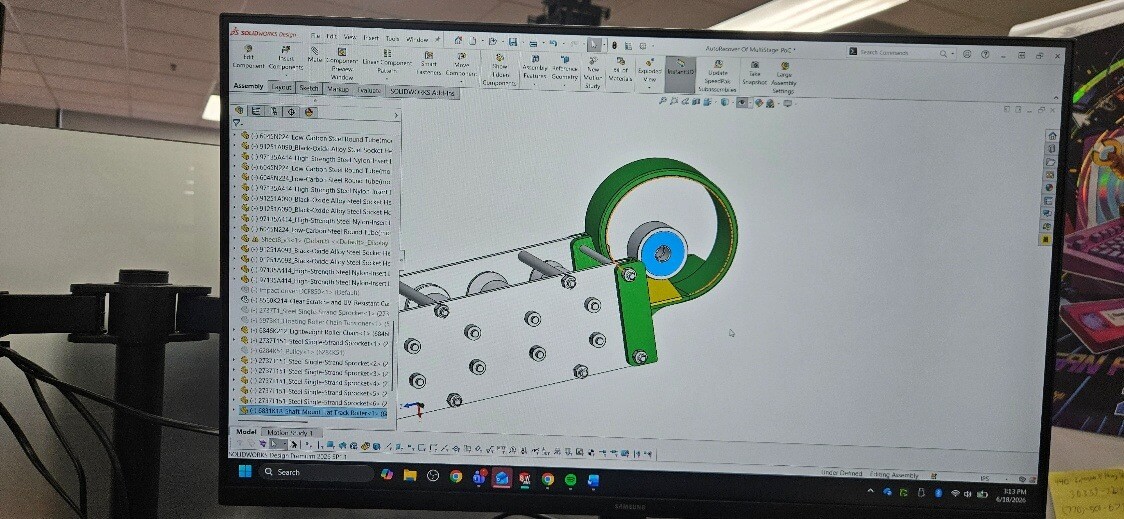
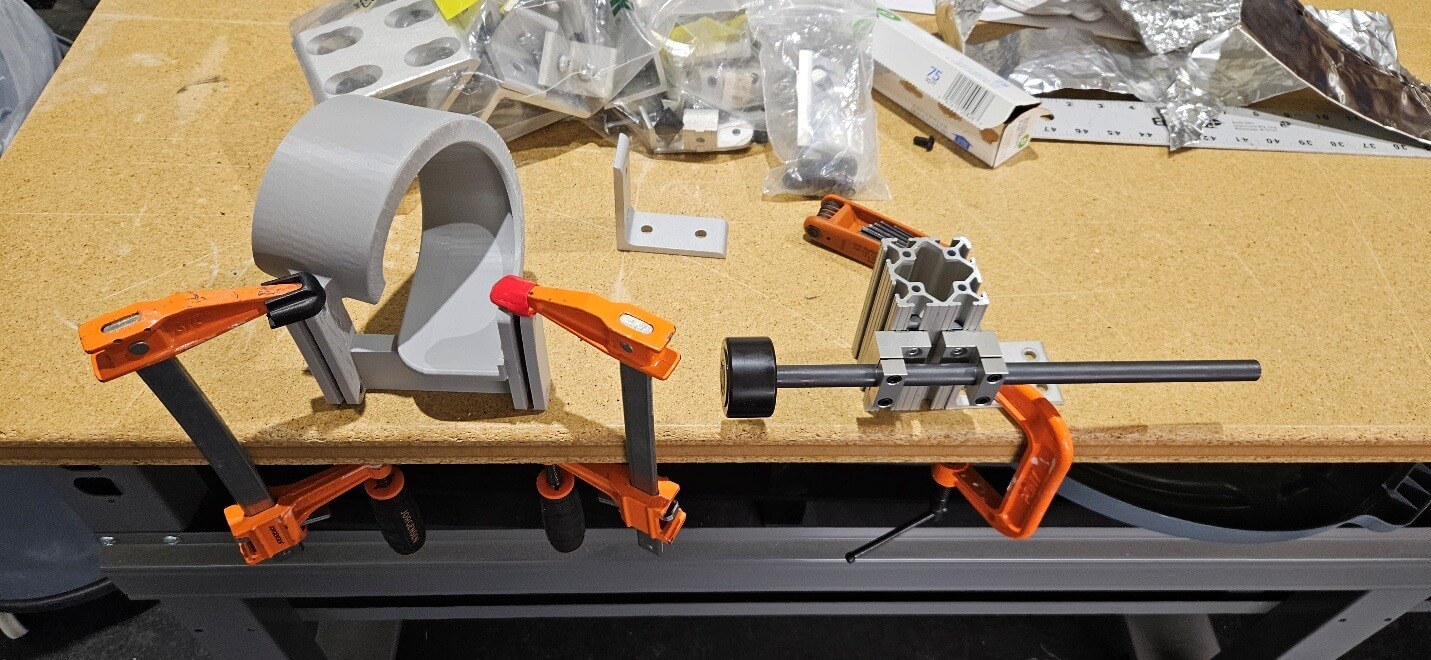
3:08 pm — Review last details of the revised helix piece for the duct forming project. Spec a rod and base that can be adjusted for the compression wheel. Order the parts.
3:30 pm — Join a sales call as a consultant for quoting a modular static exercise bench.
4:35 pm — Finished sales call; picked up battery components for the comb that were delivered. Soldering and testing that they will supply appropriate voltage/current.
5:28 pm — Finished comb electronics assembly without issue. They work well enough for testing. Return to duct CAD and finish spec’ing rod base.
5:52 pm — Solidworks crashed while trying to open a vendor’s shaft support CAD file. Re-opening to make sure nothing important was lost, saving, then…(6:02pm) calling it a day!
Friday
8:00 am — Got in and started with checking to see who was out today for the flex day/holiday (Juneteenth). First task was compiling some questions for that clothing vision system – mostly thinking about how different odd clothing items might pose challenges for handling (like falling into gaps in the conveyor) or imaging (like transparent, dark, or shiny items). Followed up with Ad in person to make sure no more info was needed.
9:20 am — Went back to the shaft support task for the duct former. Added an extra ramp to the helical support. Went back into the shop to verify that we did actually already have a few of the physical parts I had specified (saving the customer the cost of buying them new).
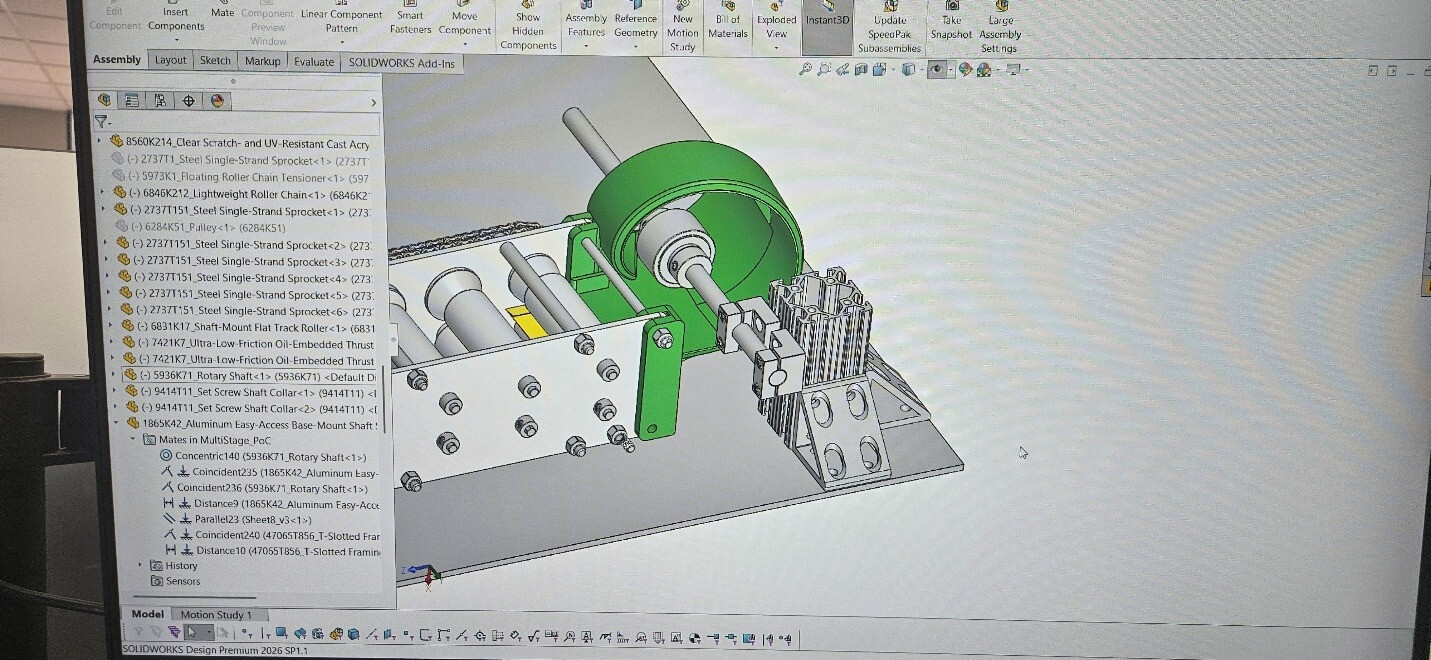
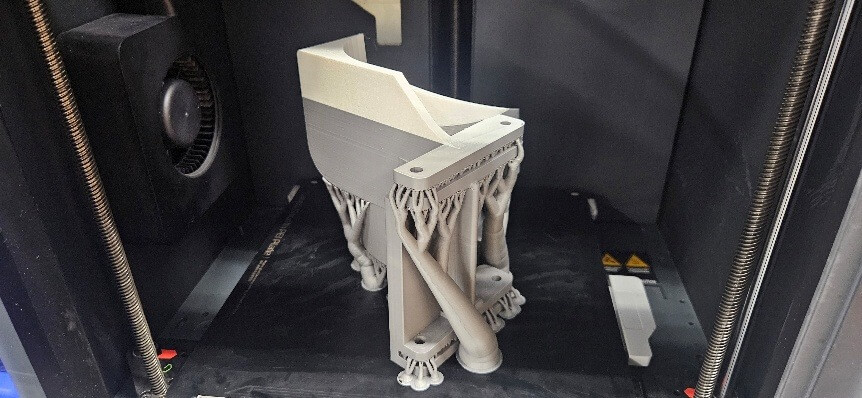
10:43 am — Share images of CAD updates with the team/channel, and setup the new helix to 3d print. Verify that the first layer adheres. Should be ready between 5pm-6pm this evening, so may not get to test it today.
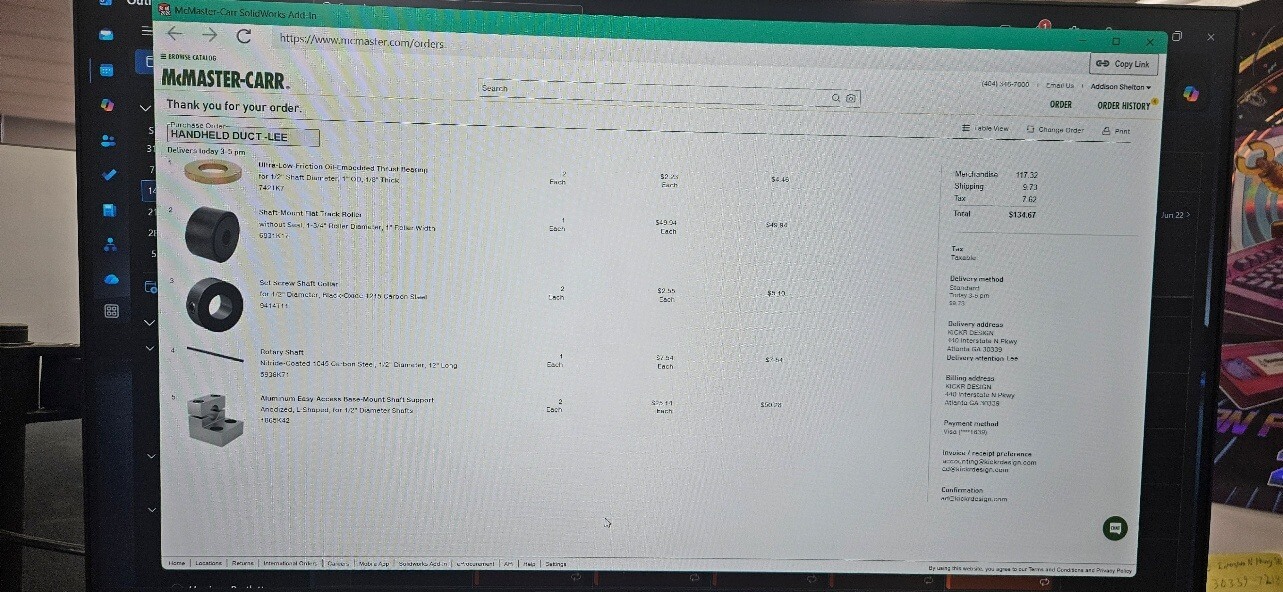
11:22 am — Placed order for components for the pinch roller only. Taking a short break.
1:00 pm — Joining a sales call
2:11 pm — End of sales call – obsessing for a bit over ways to achieve the automation the client is interested in. SO many ideas!
2:15 pm — Went upstairs to watch USA v Australia in FIFA world cup!
4:35 pm — Pretty confident we’ll win, packing up for home – but then discovered that some parts have arrived, so went to assemble/test (duct forming)
5:37 pm — ACTUALLY left.
Monday
Normal alarm 5:20am…too sore/tired from moving furniture this weekend. Struggled out of bed around 7:30am, left around 8am, got to the office just in time for my 9am 1-on-1 w/ME Team lead Greg.
9:00 am — 1-on-1 meeting w/Greg. Two projects have tasks ready for me to work on this week (Wellness Booth and Handheld Duct Former), accounting for about 30 hours total – the remaining 10 hours are tentative, as we are waiting for client payment.
9:18 am — Cleaning up and testing the new 3D print for the Duct Former project. I cut my pinkie a little while cleaning (not with the sharp metal tool, but on the plastic itself! This plastic is a particularly tough type). No blood so I get a bandaid and keep going. The old sheets do not fit this new helix so I need to cut and fold some new ones. Mentally note that I should always use cut-resistant gloves when handling parts for this project.
None of this is the polished version of engineering. It’s vendor lead times, a crashed CAD session, a battery rigged up so a showerhead test doesn’t turn into a hazard, and a reminder to wear cut-resistant gloves next time. That is the work behind every prototype we hand back: dozens of small, careful decisions that move an idea one step closer to something you can hold. If you have an idea that deserves that kind of attention, let’s build it.