

TL;DR:
Taking a hardware product from concept to commercialization is an iterative, multi-stage process, not a straight line. Successful products move through these key phases: Ideation and Feasibility, Concept, Design and Engineering, including CAD, prototyping, testing, manufacturing prep, and launch. Each stage builds on the last, helping innovators reduce risk, refine functionality, and prepare for scalable production before bringing a product to market.
Taking a hardware product to market is never a straight line. It’s a cycle of testing, refinement, and intentional decision-making.
As an innovator, it’s important to grasp every aspect of the development process, from ideation and brainstorming through the messy middle to launch (and beyond).
What Steps Are Involved in Taking a Hardware Project to Market?
Taking a hardware project to market has five basic stages:
- Ideation & Feasibility
- Design and Engineering
- Development, Prototyping & Validation
- Manufacturing Preparation
- Launch, Grow & Review
Each of these stages has its own complexities and should be approached deliberately before moving on to the next. Skipping steps or rushing decisions early on often leads to higher costs, delays, or redesigns later.
Ideation & Feasibility
The ideation and feasibility stage focuses on defining a real problem, validating demand for a solution, and shaping a viable product concept before investing in design or manufacturing. This is where ideas are pressure-tested against reality.
This stage typically includes:
- Defining a clear pain point
- Exploring potential solutions which could include rough, feasibility prototypes or tests
- Identifying the target user
- Clarifying why existing solutions fall short
- Conducting target user interviews
- Identifying real-world use cases
The goal is to determine whether your product solves a problem customers are willing to pay for. This creates a strong foundation for development, instead of advancing an idea that sounds innovative but struggles once it meets the market.
Design and Engineering
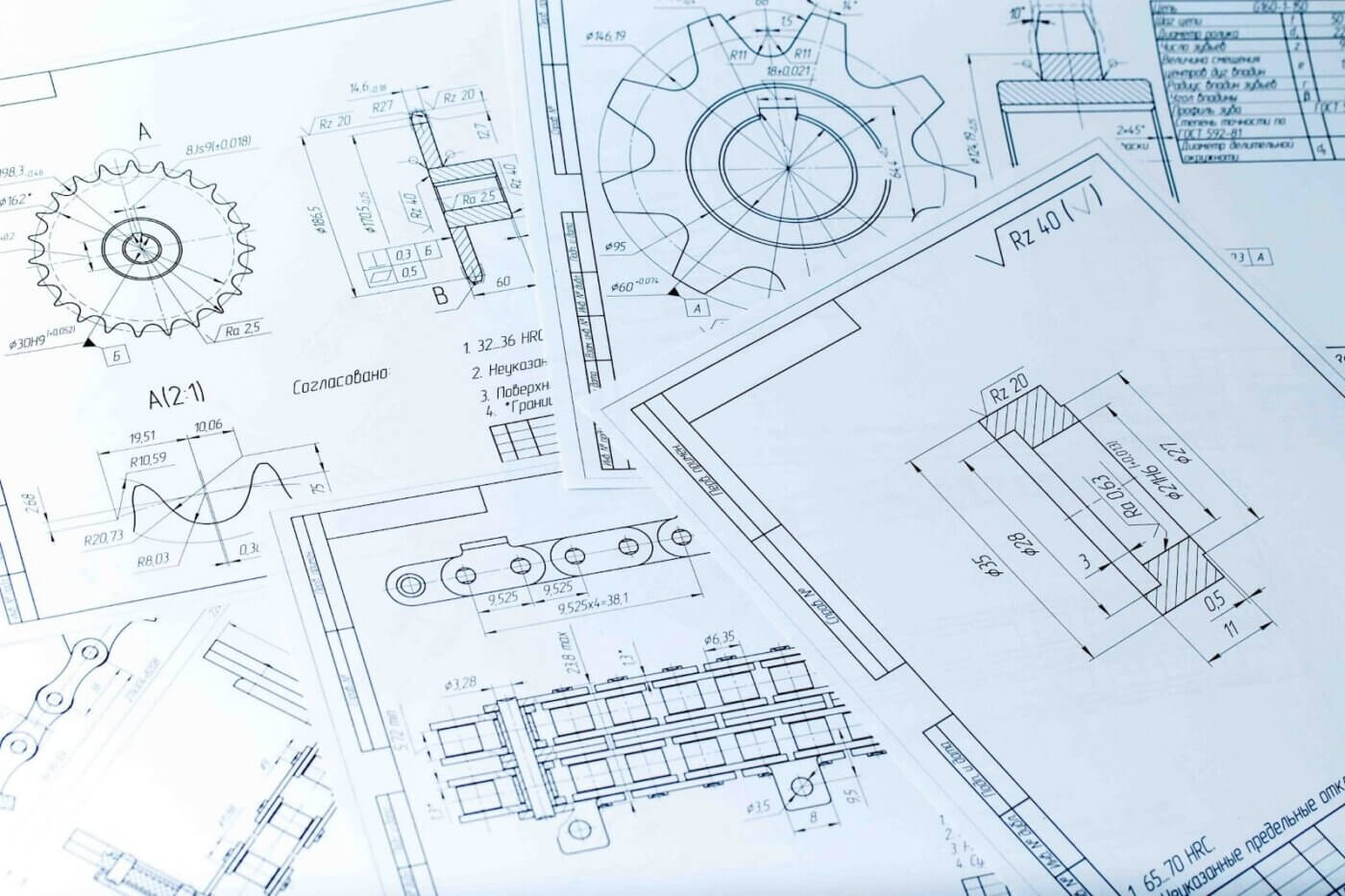
Design and engineering translate a validated concept into a functional, manufacturable product. This stage balances form, function, usability, performance, and technical constraints while making intentional tradeoffs.
Engineering decisions made here, such as product architecture, materials strategy, mechanisms, and tolerances, will heavily influence cost, reliability, and scalability later.
CAD as a Design Tool
In hardware design, CAD (computer-aided design) creates a “blueprint” for your product. The CAD design and iteration phase of taking your hardware project to market is about getting your product specs right before committing to physical production.
During this stage, you will:
- Create digital versions of your product
- Improve on designs
- Refine form, function, ergonomics, and usability
The first design is rarely the one that goes to market, so prepare to repeat this step several times before landing on the final design. Don’t be afraid to delve into several different designs until you have a product you’re happy with.
Development with Prototyping & Validation
Development brings the engineered design to life, while prototyping validates it in the real world. Prototyping happens throughout and after development, serving as a bridge between digital intent and physical reality.
Moving from a CAD model to a physical object reveals insights that digital tools alone cannot. Physical prototypes allow teams to evaluate how a product interacts with real users, environments, forces, adjacent devices, and edge cases, factors that are difficult or impossible to fully predict in software alone.
This is why real product design requires hands-on testing and iteration. Physical interaction exposes usability issues, ergonomic challenges, durability concerns, and environmental interactions that no purely digital process can fully capture.
During this phase, you can expect:
- Functional prototypes produced through methods like 3D printing or soft tooling
- Design refinements driven by hands-on testing
- Engineering adjustments to improve performance and usability
- Ergonomic validation with real users
- Verification of material choices in real-world conditions
So, how long does this phase take? The honest answer: as long as it needs to. Rushing development and validation often leads to failures in the field or costly redesigns later.
Don’t skimp here. The quality of your development and prototyping work directly affects product performance, manufacturability, and user satisfaction. Push prototypes to their limits so issues surface early, when they’re easier and cheaper to fix.
Manufacturing Prep
Manufacturing preparation is where a validated prototype becomes a product that can be produced reliably at scale. This stage focuses on refining the design specifically for manufacturing efficiency, consistency, and cost control.
Key activities include:
- Refining the design for scalability and manufacturability
- Final material adjustments (e.g., moving from a generic material callout to specific grades like 6061-T6 aluminum or a defined PC vs. PC+ABS blend)
- Applying DFM (Design for Manufacturing) or OFM (Optimization for Manufacturing) principles
- Optimizing for manufacturing processes and cost efficiency
- Aligning the design with a manufacturer’s specific capabilities and constraints
The outcome of this stage is a production-ready design that manufacturers can replicate consistently, efficiently, and predictably.
Launch, Grow, Review
Reaching launch is a major milestone, but it’s not the finish line.
A successful launch is paired with a plan to collect feedback, analyze performance, and identify opportunities for improvement. Post-launch insights often inform cost reductions, design tweaks, process improvements, and next-generation versions of the product.
The strongest hardware products continue evolving long after their first release.
Taking a Hardware Product From Concept to Commercialization Means Iteration, Testing, and then Doing It Again
Taking a hardware product to market is about building smart, intentional iteration and preparing for scale from day one. Kickr exists to guide innovators through every stage of the concept-to-commercialization process so that great ideas don’t stall or sputter out before they ever reach the market.
If you’ve got an idea that you want to take from ideation to implementation, get in touch with the Kickr team today, and we’ll help you:
- Determine if your idea is viable
- Create digital iterations of your product
- Further develop your design into a tangible product
- Prepare it for mass manufacturing
- Launch, scale, and improve your product.
From the first spark of an idea to full-scale production, give your product the best possible chance to succeed.