
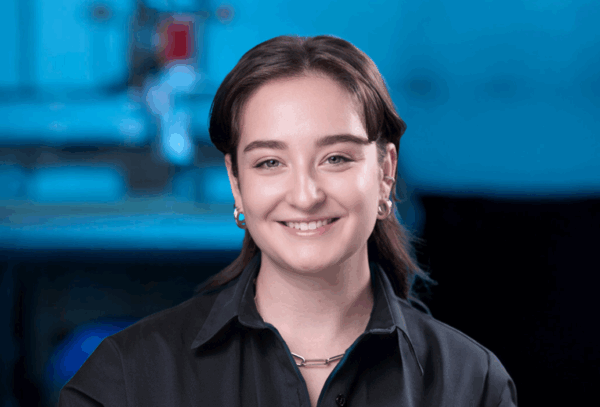
Kylie Early is an Industrial Designer + Sourcing Specialist with a background in sculpture, photography, and experience in beauty, wellness, and lifestyle product development. She brings a unique perspective to the Kickr team, and we wanted to learn more about how she blends her creative background with a strategic approach to product development.
With your background in sculpture and photography, how has that artistic bent influenced how you approach product development?
My background allowed me to explore how shapes, textures, and light convey a story. That exploration of form and experience carries into my work in industrial design. Every product I create, I consider how it will be seen, touched, and used. Art taught me to observe, experiment, and empathize, and those skills make product development more innovative and human-centered.
Your “superpower” is bridging the gap between concept and production. What does that look like in practice, and why is it so critical for clients?
From the start, I use my industrial design experience to focus on aligning with the needs and desires of the end user, material selection, and cost, while anticipating challenges and managing communication. This enables me to refine the product vision and develop a clear strategy for bringing that vision to life in the final product.
Clients often find the most challenging part of product development is knowing where to start with manufacturing and ensuring the product matches their vision. My “superpower” ensures a seamless design process that allows clients to focus on their vision while I manage the details. I translate ideas into actionable steps and keep everyone on the same page, ensuring the final product works as intended without compromising the original concept.
What are the biggest challenges designers and companies face when taking an idea or prototype to production, and how do you help navigate those challenges?
One of the biggest challenges in moving from prototype to production is understanding that manufacturing is rarely perfect on the first attempt. Great products take time.
Molds might need adjustments, materials behave differently at scale, and timelines can shift as revisions are made. By embracing the process and managing revisions strategically, we turn prototypes into reliable, high-quality production outcomes without compromising the original vision.
I help designers and companies prepare for the iterative process. We plan for revisions, set realistic expectations regarding production timelines, and focus on the impact of each adjustment on the final product. This prevents frustration and ensures that every change contributes to a better design that’s ready for manufacturing.
Can you share a favorite project you’ve worked on where you really saw the value of balancing creativity with strategy?
Early in my career, I took a CAD model to a vendor too soon in the design process. In doing so, I learned the design wasn’t ready for manufacturing, draft angles weren’t adequately reflected in the surfaces, and the first CAD iteration had undercuts that would prevent the plastic housing from being removed from the mold.
Looking back, the way I initially built the model in solid bodies caused the undercuts. Transitioning to surfacing techniques allowed me to refine the design while reducing both mold and unit costs.
The project taught me the value of balancing creative design exploration with strategic decisions around manufacturability. The product remains on the market today, which makes me proud and underscores how thoughtful iteration and strategic planning can make creative ideas viable in the real world.
When you studied abroad in Hong Kong, what insights did you gain about global design and manufacturing that influence your work?
In Hong Kong, I spent a considerable amount of time exploring the city’s street markets. My roommate and I would strategize about what we were looking for, what price we were willing to pay, when to walk away, when to circle back, and how to negotiate.
Those experiences taught me something important: communication isn’t just words. It’s context, timing, and understanding the people you’re working with.
At the time, I knew very little about manufacturing. However, learning how to listen, adapt, and navigate those conversations provided me with the foundation I still utilize every day in global design and manufacturing.
I understand how cultural context influences expectations, how to communicate effectively with vendors, and how to align goals early in the process. This allows me to design products that are not only functional and innovative but also production-ready across different markets.
Many companies struggle with sourcing and production. What advice would you give to someone trying to take their first product from sketch to shelf?
Many first-time creators struggle with sourcing and production because they don’t realize the extent of collaboration and iteration required.
My advice is to remember that vendors are people too. Build genuine relationships with them by celebrating their expertise, scheduling regular calls, engaging with engineers, and maintaining open and transparent communication. This fosters trust and creates a team of collaborators rather than just contacts.
Secondly, rushing rarely helps. Creating a product takes time, especially a great one. Most first-time products undergo several iterations before everything is perfected and it’s ready for prototyping or production.
Embrace the iterative process to navigate challenges smoothly and increase project success. Taking this approach increases the likelihood that your final product will align with your vision and user expectations.
See Kylie’s bio here to learn more about our creative savant!